You have put gladness in my heart.
Psalm 4
God certainly put gladness in my heart this Easter and I hope it was the same with you.
It was magnificent as usual. Thanks to all those who made it so special. The choir, the music, the flowers, the decorations, the liturgy itself. The singing of the Exultet is always a highlight for me and Faye’s rendition was just terrific. Glorious new life is offered to us yet again. New energy and excitement. Refreshment. New beginnings. I felt it on Easter Eve at the beautiful Vigil Eucharist. Maybe you felt it too. And now we continue to hear about this potential transformation in the Easter and post Easter readings. And we need to pay attention as this new life is held out to us. This offer of new life right now, not just some time in the future.
But the beautiful Easter liturgy and the hopeful Easter readings can easily fall flat and just disappear from our focus if we have lost our hunger for glory, if we have become closed to the offer of new life and new energy. If we have become skeptical that it can really happen. One of the three B’s can catch us off guard. the blues, the blahs or burnout. Post Easter Blues: the return of some depression for persons prone to it. Post Easter Blahs: when we have relied a bit too much on excitement to distract us from the “everydayness” of our lives. Back to same old same old. Burnout: for persons who have put a great deal of work into the celebration of Easter. Whether at church making the celebration wonderful or at home with lovely family events taking a lot of energy. A kind of exhausted feeling can result.
The fully human Jesus no doubt experienced his version of the blues, the blahs and burnout. And he saw it and understood it in his followers. Those kinds of feelings presented a challenge because they had a big and difficult mission. An often discouraging mission. A mission that needed a lot of energy and perseverance.
What was Jesus’ remedy for burnout? How did he remain open to transformation from discouragement and exhaustion to renewed energy. How did he keep returning to his mission in spite of discouragement?
He tapped into the rhythms of nature with their seasons of death and rebirth! As a truly incarnated, enfleshed, person he lived the seasons with their death and rebirth. Their times of quiet invisible growth as well as the times of glorious new growth bursting through for all to see. He knew that you can’t have one without the other. His teaching was full of references to the way growth occurs in nature, how what looks like death springs forth into glorious life.
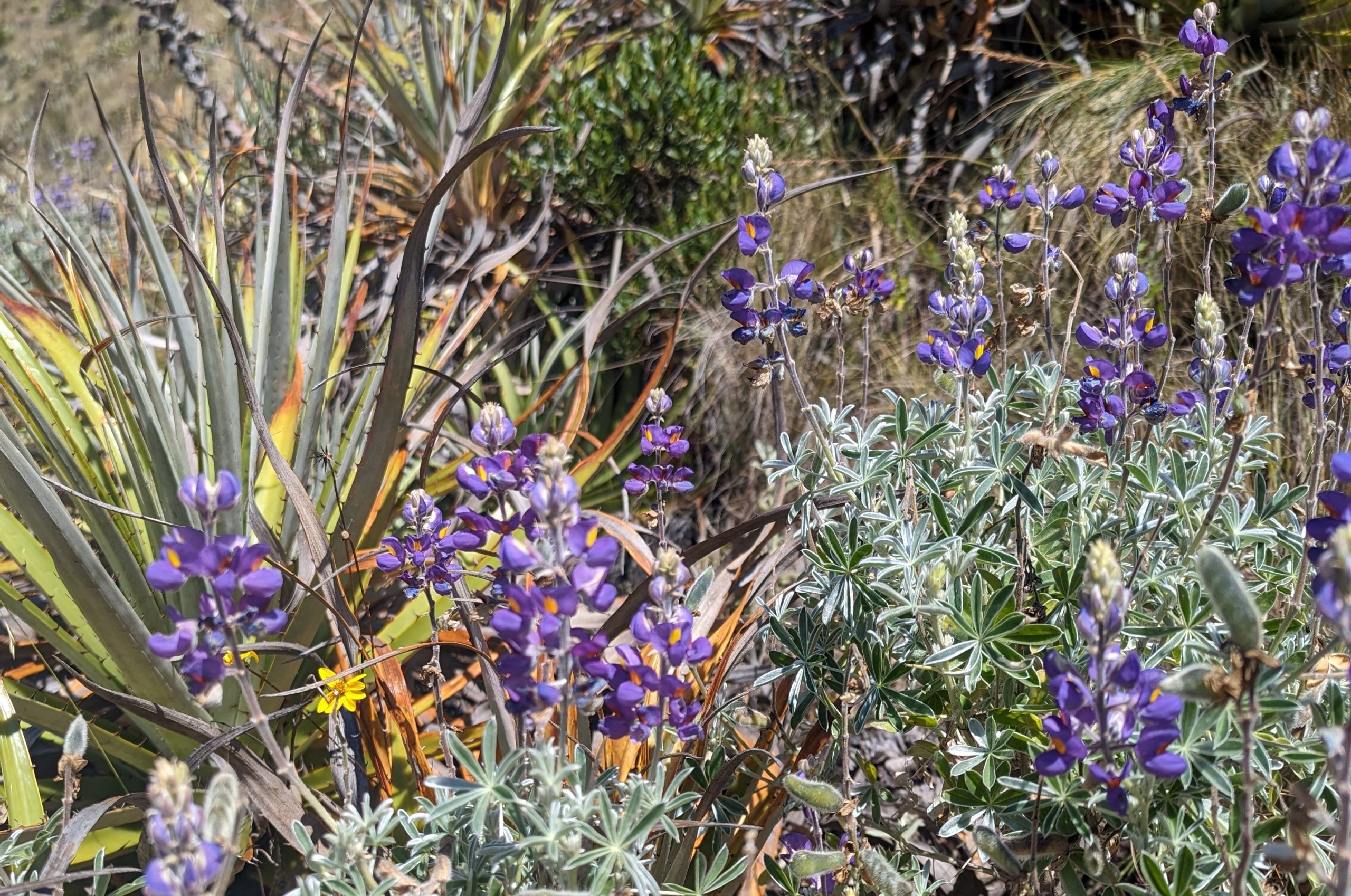
There couldn’t be a better time than Spring for us to tap into these nature learnings. Maybe you can’t wait to get outside and work in your garden. What a place to get over the Post Easter Blahs. What a place to get back the glory of Easter. We aren’t all privileged to have a garden nearby but perhaps just being extra aware of what you are able to see in nature can help you to open yourself to the new life, new energy messages all around us.
Someone asked the author Annie Dillard once how she, so educated and immersed in science, could continue to believe in God. She paused and then said simply: “We’ve met!” And then went on to take the next question. She could have gotten into a debate, tried to convince the person of all the reasons one might believe in God. But she simply said: “We’ve met!” How can you believe in God? We’ve met! I’m not sure how much the glory of nature figured into that “We’ve met” for Annie but I know it does for a lot of people. We have this wonderful little plaque in our garden that says: “The kiss of the sun for pardon, the song of the birds for mirth, you are nearer God’s heart in a garden than anywhere else on earth.” Wouldn’t it be wonderful if we could use nature and springtime to keep our Easter awareness fresh and then be able to say of God: “We’ve met!”
Let’s look at some of the ways we could do that:
A fruitful garden needs TILLING, FERTILIZING, WATERING and (my least favorite) WEEDING. We need to do the spiritual equivalent of all those.
Tilling: The soil needs to be broken open, softened so that it can embrace the seeds or seedlings. Otherwise not much is going to happen. We need to loosen up our hardened soil too. Honest self-reflection is the best way. A willingness to really take a good hard look at ourselves our warts and all. We must do our part but God of course will help us. Remember the prophet Ezekiel’s favorite message from God to the people: “I will remove their heart of stone and give them a heart of flesh!” You could say a “tilled” heart. A heart that is soft enough to receive the seeds of wisdom and justice and compassion. The best way to do that kind of spiritual tilling is to humbly look into ourselves in a gentle and friendly way. Not in a harsh self-critical way. Our soil needs to be turned over and gently opened up. We’re not talking about harsh strip-mining that totally disrespects the beautiful soil. It reminds me of those terrible words in the hymn “Amazing Grace”: “A wretch like me”. I appreciate the hymn but I don’t like those words at all and wish they had never been written. That is not how God wants us to think of ourselves. Our tilling needs to be friendly towards God’s beautiful earth – in us!
Fertilizing: Is the next step. Ploughing back into the soil those things we don’t like in ourselves and maybe shouldn’t like. But using them as fertilzer for our ongoing growth. Things we’re not proud of but can learn from. Those are the very things that can be transformed into useful fertilizer for our ongoing spiritual growth. We can think of them as a rich mud in which better things can grow in the future. Don’t be afraid of your mud. The Buddha said you can’t grow a beautiful lotus flower on marble! You grow it in mud!
Watering: of our spiritual gardens is too often neglected. You see with fertilizing you can just throw in the mud and manure and sit back and wait for it to do its magic. Watering on the other hand needs a bit of self-discipline. Consistency is needed to avoid drought. The psalms and other writings are full of the imagery of “thirsting” for God. Julian of Norwich talks of the “sweet-tasting god”. If we want to benefit from this refreshment we need to water regularly. For each of us the process may be a bit different. There are so many ways to keep our spiritual lives fresh and dynamic and too many of those ways are more and more in decline. Simple things. Starting the day with an offering prayer. Maybe some mantra that you have long found useful as you begin your day or a simple little prayer: “Lord here I am again. Gonna try to make it a good day!” Spiritual reading of some form or another. My spiritual director once suggested I simplify my life, declutter a bit by having just a couple of things on the tables next to where I sit most often: an entertaining book, a spiritually uplifting book and maybe something symbolic like a candle. I must say I haven’t been very regular with this. Too many distracting things seem to gather there. Clutter. But I know the main thing is to keep coming back to that “simplicity” suggestion over and over again. I am more likely to be regular in watering the garden outside if I create a bit of structure around the task. If I do it at the same time each day for example. I think it’s the same with the “watering” in our spiritual lives. Try to create a routine, some structure so that we’re more likely to remember and get it done.
Weeding: Finally weeding. A never-ending task in the garden. A never-ending task in our spiritual lives. Don’t you find this to be the case too often. You do some excellent decluttering, spiritual weeding, and you’re kind of proud of yourself. A few weeks later your life seems all cluttered up again. How did this happen you might ask. I think it’s human nature and also part of our culture these days. So many distractions. But we need to be on the lookout for the things that we might consider the weeds of our spiritual life. Things that are getting in the way of our growth.
Just as with tilling, we need to be careful that weeding doesn’t become a ruthless angry process. We don’t want to go from too much clutter to being obsessive about a tidy garden. My sister Kathleen and I were the closest in age and interests when we were children. We used to spend a lot of time daydreaming about this lovely perfect farm we were going to own when we grew up. It was going to be just perfect. Tarred roads. Flower borders around the crops. Even the farm animals were going to be sparkling clean. A childhood fantasy. But it must have lingered a bit in my unconscious, because there is a perfectly beautiful tidy farm not far from our home and I still sometimes drive past there and just want to go in and congratulate the farmer. But it’s not realistic is it?! If you drive out into the country you quickly understand that farms need to be rather untidy places. Otherwise the hard work would never be completed. Weed but give yourself a break. It doesn’t have to be perfect.
Well just a few ideas to keep your Easter going. To keep your faith-life vibrant and alive. It’s important, Not just for you but for the community, for the world. People are depending on you and me to keep faith and love and hope alive in this world. The Psalm 4 text I have used today doesn’t say only: “You have put gladness in my heart!” It also says: “Many are saying Oh that we might see better times”. Our communities need us to be resurrection people; people of hope for THIS world here and now. Not just some future reward. They often feel despair. They fear that nothing’s going to change, and that we won’t see better times.
Let’s embrace our vocation as “resurrection people.” Let’s live and share our conviction that resurrection is unstoppable and new life is available – right now.
(Peter J. Bridge 4/14/2024 Trinity Cathedral.)