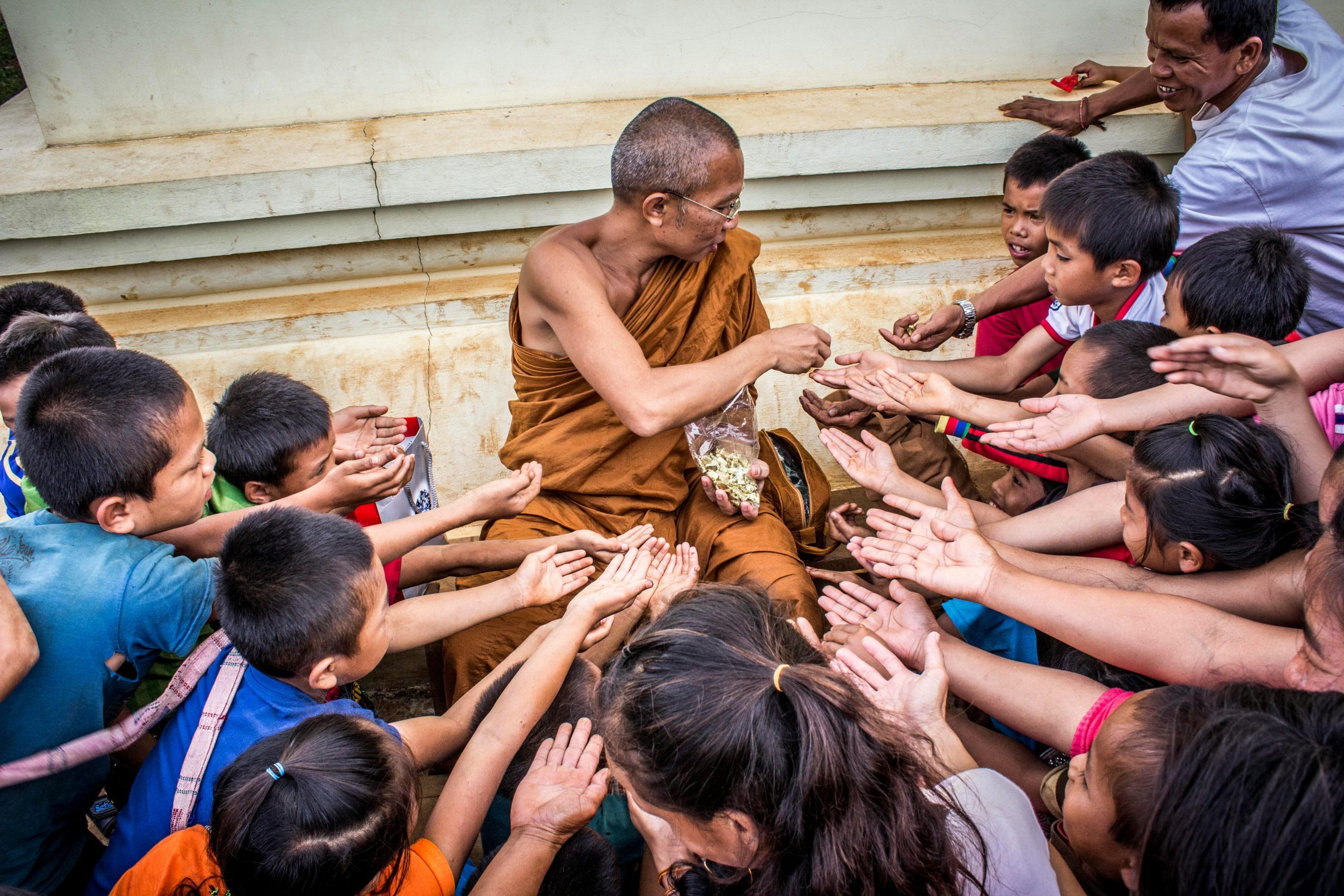
The Hebrew Scriptures, the Christian Gospels, “Justice and Peace” and “Liberation” theologies have strong agreement that God has a preferential option for the poor, the most vulnerable and the oppressed. In the Hebrew Scriptures prophets complain when fancy religion is made more important than justice for the poor, the orphan, the widow, all those most vulnerable. In the Christian Gospels Jesus finds fault with fancy religion that neglects to oppose the oppression being visited upon the poor by the Roman Empire and those who cooperate with it for their own welfare. And then, applying all this to modern times, liberation theologies have inspired people to get involved, even take risks, to change political systems that involve injustice.
How do we take up the mantle? How do we, both through our commitment and action, and also the use of our vote, further this justice-seeking for the poor?
The exhortations in Scripture that we trust in God, that God will look after us and keep us safe, are not just for our personal soothing and consolation. Those exhortations to trust are directly related to our willingness and ability to prioritize the needs of the most vulnerable in our world. Fear that we won’t be safe, obsessive preoccupation with our own safety, are huge obstacles to our willingness to focus on and get working on the needs of others. Trust that we’ll be OK makes it much more likely that we’ll focus on the needs of others.
If we are serious about sharing in God’s priority for the poor and vulnerable, then we absolutely need to develop an attitude of TRUST that we’ll be OK. It’s natural to want to look after ourselves appropriately, keep ourselves reasonably safe. But the problem is that the good intention of keeping ourselves reasonably safe has a way of getting out of hand. We can become obsessed with our safety. We can spend our lives chasing the unrealistic goal of perfect safety. As a result it becomes increasingly difficult to focus on the greater needs of others.
Our obsession with safety sometimes has a lot to do with money. My Dad, a banker, would tell us of rich people begging in tears for that one more big loan: “Mr Bridge I need this buffer to secure and insure my other business interests!” They were unable to TRUST that they could stop with all the accumulation and everything would be OK.
Instead of TRUST TRUST TRUST and you can start today to care for others, the message is often the very opposite. ACCUMULATE ACCUMULATE ACCUMULATE and then one day in the future you will have a surplus of wealth and be able to give to some of your favorite charities. But the accumulating of wealth takes over and God’s priority option for the poor tends to be forgotten. Or if not completely forgotten it seems like an afterthought. It becomes “Charity” in the worst sense of that word: something given from my leftovers instead of sharing my meal with another human being.
Working on trust so that we can focus on the needs of the most vulnerable is especially important during a political season and at times when you are about to exercise your vote and want to do it in the most responsible way for the good of the whole community. A favorite technique of politicians is to focus not on trust but on fear. They try to get your vote by suggesting that you have much to fear if you don’t vote for them. All the more reason during a political season to cultivate in yourself a spirit of trust and calm. Out of such a spirit you are far more likely to make a wise assessment about the kind of vote which takes into consideration not just your needs but also the needs of the most vulnerable.
Misguided politicians often suggest that the poor don’t have to be a special priority. Just focus on the health of the whole economy, they say, and the poor will be OK. They push the false notion that an improving economy always helps everybody including the poor. It is sometimes expressed in the saying: “When the tide comes in, all boats rise!” That statement has been proved false many times in history. The most recent being the way since the 1970’s the rich have got richer and the poor have got poorer. The incoming tide has helped the rich far more than the poor.
So we’ve certainly got our work cut out for us. We’ve got to heed God’s call that we take care of those in need. God’s priority for the poor has to be our priority. And for that to happen we’re invited to work on TRUST. The kind of trust that lets us take risks for those in need. The kind of trust that helps us put aside our excuses, our constant preoccupation with our own safety first!
How do we do that? How do we cultivate in ourselves the kind of trust that makes us less self-preoccupied, and more compassionate and active for the wellbeing of others?
Trust is developed by cherishing and resting in the blessings of each present moment and each present context. It’s almost impossible to develop a deep sense of trust if we’re always wandering around in the past or the future. The past is often about regret and the future is often anxiety about whether we’ll be perfectly safe. Same thing with space. If we can’t be comfortable where we are and we’re always looking to the next place we want to be, it’s very hard to be calmly trusting that where we are, is probably exactly where we are supposed to be right now.
Many wise people have suggested over the centuries that we should live each day as if it is our whole life. Waking up as if this very day is our whole life. Waking to the glory of it, the sheer wonder of it. Living it as if the day is the gift of life itself. The wisdom of work and the wisdom of rest. The evening gratitude of a life well lived. The embracing of sleep with trust that it is just supposed to be. It is the day’s fulfillment. There is an ancient Sanskrit poem that I think is just marvelous for putting us on track to developing trust. It goes like this:
Look well to this Day (THIS day!)
for it is life
the very life of life
in its brief course lie all
the realities and truths of existence
the joy of growth
the splendor of action
the glory of achievement. So, Look well to this day!
~Adapted from an ancient Sanskrit poem. Author unknown.
What a wonderful meditation if we want to anchor ourselves calmly in the present. If we want to develop the kind of trust that makes us available to share in God’s work of caring for those in most need of care. Look well to this day!
Anchoring ourselves in SPACE is equally helpful for learning to trust! I’ve mentioned before how my nun sister Kathleen introduced me to “Kitchen Spirituality.” Choosing the simple cozy kitchen, the heart of the house as the best symbol for our spiritual growth. (maybe not so much the modern day kitchen which can be too much about the best granite counters, the finest fancy island and an out-of-this-world Espresso Machine). Rather the simple warm life-giving kitchen of some generations ago. The hearth inviting all, often three generations together, to its comfort and warmth. The stove delighting all with its aromas. The grandparents ready to impart wisdom or wit. The children doing their homework. We could even adapt the ancient sanskrit poem to this place of trust building. Now instead of “Look well to this day” we might say: “Look well to this ROOM, this simple kitchen…
Look well to this ROOM, this simple kitchen…
For it too is life
The very life of life
within its walls lie all
the realities and truths of existence
the joy of growth
the splendor of action
the glory of achievement.

Outside is necessary work
And the healthy tug of the wider community
But the simplicity of this room
Calls us home to our truest selves
the simple needs of our lives
The compassion and trust that calls us to share
And to work for the good of others!
Look well, therefore, to this simple Room!
If we learn to TRUST that we’ll be OK we are so much more likely to embrace our calling to care for others especially those most in need of care. Anchoring ourselves in our present TIME and our present SPACE are critically important for cultivating that important trust. Most of us are not so good at it, but we need to try it over and over again. Rest in the blessings of the present time and place!
Look Well to This Day! In it you will find the time you need for God’s priority for the poor.
Look Well to This Room. The simple kitchen of your life. Into it, into the simplicity of the kitchen, you will come home to yourself. You will stop your searching for perfect safety and simply know that all shall be well. Quite well enough for you to give some of your safety away for the sake of others. Amen.